Contents
- From a Director's Email to a Track That Can Sit in the Scene
- Two Copyrights Living Inside One Bedroom Recording
- Signing the Splits Early and Auditing Every Borrowed Sound
- Printing Stems That Carry the Spring Reverb With Them
- Where Festival Permission Ends: Media, Territory, Term and Exclusivity
From a Director's Email to a Track That Can Sit in the Scene
The email arrives on a Tuesday. A director heard a four-track song recorded in a back bedroom, all cassette hiss and a vocal sung inches from the mic, and wants it under a night-driving scene. So what does a home-recording musician have to verify and deliver before that song can legally attach to moving images?
The artist needs authority over both copyrights in the song, a written split sheet signed by every contributor, and clean, aligned audio files an editor can actually cut. And the deal needs a contract whose scope is spelled out to the edge.
Directors come looking for exactly this kind of record. Woozy pitch drift, tape saturation and a close-recorded bedroom voice build atmosphere faster than a library cue ever will. That texture is the appeal.
The trouble starts at the paperwork stage. Underground bands tend to run on handshakes, shared hard drives and a vague memory of who brought which riff to practice. An unsigned collaborator agreement or an unidentified sampled voice leaves the artist unable to back up the rights being promised, and a music supervisor on deadline will move to the next track on the playlist.
A good inquiry already contains the map. It should name the exact recording and version, the proposed scene, the approximate seconds of music, whether the use is background or featured, the platforms, the territory, the license term and the proposed fee. From there the path runs in order: rights check, written approvals, executed licenses, delivery files.
Picture Lock Is the Deadline
Set one milestone before the first picture-locked export containing the track: confirm that the permissions cover the intended screening or distribution. A delivery date creates pressure. It creates no clearance.
Two Copyrights Living Inside One Bedroom Recording
Every recorded song holds two separate works. U.S. copyright law lists musical works under 17 U.S.C. § 102(a)(2) and sound recordings under § 102(a)(7), and the film industry licenses each one with its own document.
The composition and the synchronization license
The synchronization license covers pairing the underlying song with picture: the original melody, the lyrics, the musical expression the writers created. Songwriters and their publishers or administrators control it. One detail matters for psychedelic records built on drones and two-chord vamps. A commonplace chord progression earns no automatic protection by itself. The protected material is the original expression layered on top.
The recording and the master-use license
The master-use license covers the specific captured signal, the actual performance that lives on tape or on a drive. Its owner might be the artist, an independent label, or someone else named in an agreement. Paying for the session settles less than most bands assume. Ownership follows the recording agreements, assignments, performer agreements and any work-made-for-hire terms, so those documents need a read before anyone quotes a price.
One contact, or several
A track counts as one-stop only when a single contact can authorize both sides for the requested use. That is the cleanest offer a supervisor can receive. A band where four members hold composition shares and a micro-label holds the master can still clear quickly if everyone answers fast, but it remains a multi-party clearance and should be described honestly as one.
Two checks prevent embarrassment. A publishing administrator who collects royalties may lack authority to approve sync uses, so confirm the approval right itself. And for any one-stop offer, keep written evidence of authority covering every interest being represented, including publisher, label and collaborator approval requirements.
This framework follows U.S. practice. If the film is headed for international distribution, ask the producer which territories are in play early, because ownership, performer rights and collecting-society rules can shift abroad.
Signing the Splits Early and Auditing Every Borrowed Sound
The split sheet belongs in the session, before mixing finishes, while everyone who played is still in the room or at least still answering texts.
Drafting the sheet
- List the song title and the exact version the sheet covers.
- Write each contributor's legal name and songwriting role.
- Walk through the riffs, lyrics, loops and synth parts one at a time. Performing a part, programming a sound or supplying a patch does not automatically make someone a songwriter, so the conversation has to happen out loud.
- Assign composition shares that add up to the whole song.
- Record publisher or administrator details for each writer.
- Collect dated signatures, then document master ownership and contributor permissions on a separate page.
The split sheet records who owns the composition. It does not license sync, prove master ownership or clear a borrowed sample. File it in a rights folder tied to the exact recording version, alongside contributor agreements, sample licenses and the relevant emails.
The sample audit
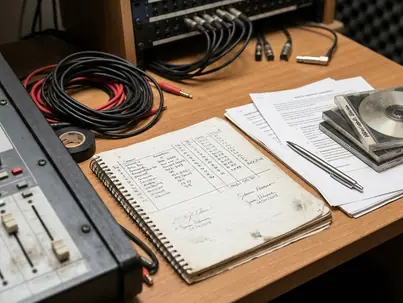
Lo-fi and psychedelic production borrows constantly, and each borrowing carries its own owner. A vinyl drum break can involve both the recording and the composition behind it. Dialogue lifted from an obscure cassette can carry rights in the source recording, the underlying script or the original audiovisual work. Test-record tones pulled from an old spring-reverb demo disc need their actual rights identified. Sample-library loops come with terms that may restrict audiovisual use.
Obscurity, tape hiss and heavy processing clear nothing. An unresolved owner can make a track impractical for a production on deadline, and that usually ends the placement.
Self-made field recordings sit in different territory. A field recording the artist captured is not automatically a third-party music sample, but recognizable voices raise questions of consent, privacy and publicity. Log the location, the circumstances and any permissions obtained at the time.
The Cover Song Trap
The compulsory mechanical licensing framework in 17 U.S.C. § 115 lets a band release a cover. It does not authorize synchronization. A psychedelic reworking of someone else's song needs composition-side sync permission from the original owner or authorized administrator, plus a master license for the new recording.
Printing Stems That Carry the Spring Reverb With Them
Film editors need room to put dialogue over the music. That means a set of deliverables alongside the stereo master.
What to print
Print the full mix, a true instrumental with every vocal removed, and grouped stems: drums and percussion, bass, guitars and synths, lead vocals, backing vocals. A TV mix is a different file, since it may keep backing vocals or selected vocal elements. Ask which one the production wants.
The bounce, step by step
- At mix approval, save and archive the full session.
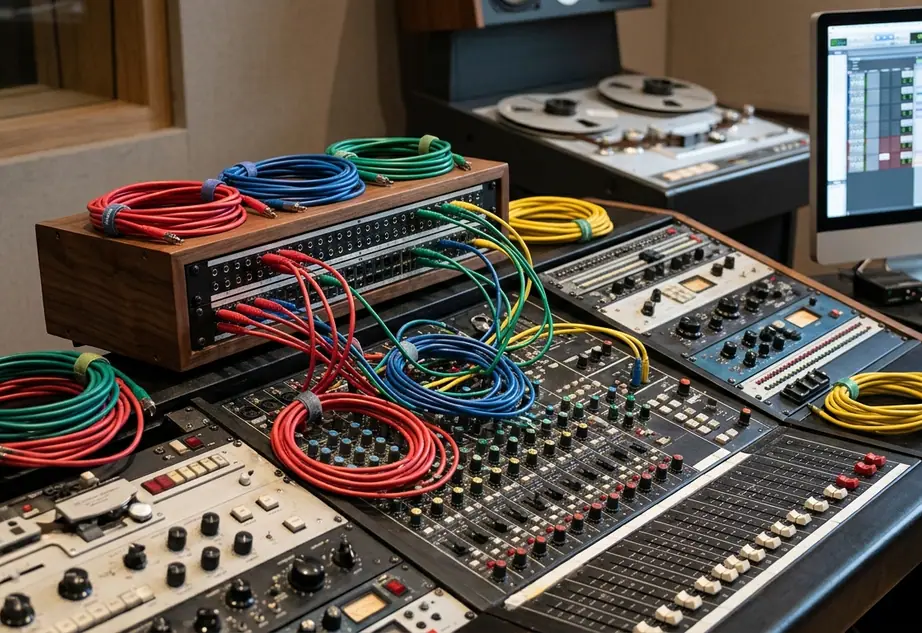
- Print outboard spring reverb and tape delay while the hardware settings and patching are still in place. Once the cables come out, that sound is gone.
- Assign shared effects returns to stems deliberately, and label any effects-only returns.
- Export every file from the same start point to the same end point, including count-in space and the longest reverb tail. Trimming each file to its first audible note destroys alignment.
- Reimport the exports at their original timestamp and compare the sum against the approved mix.
Expect a small mismatch on tape-heavy records. Mix-bus compression, saturation and tape processing behave nonlinearly, so separately processed stems may not sum exactly to the master. Supply the approved stereo reference, describe the routing, and skip any promise of perfect reconstruction. The same honesty applies to room-mic bleed: if a vocal ghosts through the drum stem, say so, especially where the editor expects a vocal-free passage.
Labeling and format
Deliver uncompressed WAV or AIFF at the production's specification. A 48 kHz, 24-bit WAV is a common audiovisual format; keep the native-resolution archive too, and never pitch upsampling as recovered detail. Name files plainly, such as TrackTitle_Instrumental_48k24.wav and TrackTitle_Drums_48k24.wav, and include a text file listing writer and master-owner contacts, version date, duration, tempo where it means something, and any assigned identifiers. A supervisor should never open an anonymous file.
Where Festival Permission Ends: Media, Territory, Term and Exclusivity
A sync deal turns on four levers.
- Media names the authorized uses: festival exhibition, theatrical, streaming, broadcast. Trailers, ads, social clips and soundtrack releases need their own explicit mention.
- Territory names where the film can be exploited, from a single region to worldwide.
- Duration names how long. A festival-only term of 12 to 24 months works as a negotiating example; state the trigger date, such as first public exhibition.
- Exclusivity names which competing licenses the musician must hold back, if any.
Festival permission stops at the contract's edge. If the film sells to a streamer, the same bedroom recording in the same scene needs an expressly covered grant or a defined step-up. A solid step-up clause names the trigger, the added media and territory, the additional fee, the payment deadline and whether fresh approval is required.
Before signing, a qualified music attorney should read both licenses and any release. Watch for assignments, buyouts, broad indemnities or exclusivity buried beyond the proposed sync terms, and tie every warranty to rights already verified. A cue sheet will follow for performance royalties; it supports the licenses and replaces neither.
Finish the Record Twice
Keep the signed documents in the same folder as the delivered audio, so the paper and the files never drift apart.
On the day the master mix is final, every band and bedroom producer should print the clean instrumental, archive the stems and get the composition splits signed before anyone leaves. Make it as fixed a part of the ritual as the last playback through the car speakers. The director's email will come on some random Tuesday, and the artist who already has the folder ready is the one whose song ends up in the film.