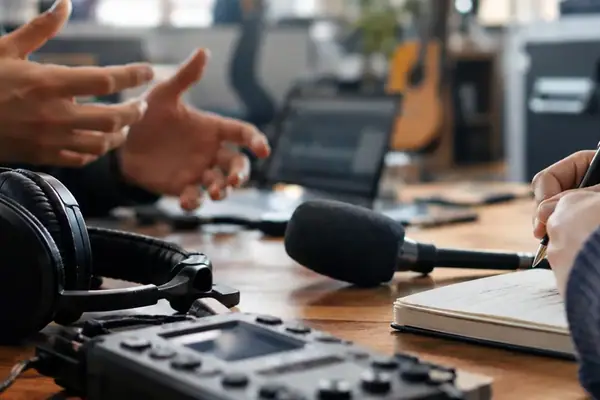
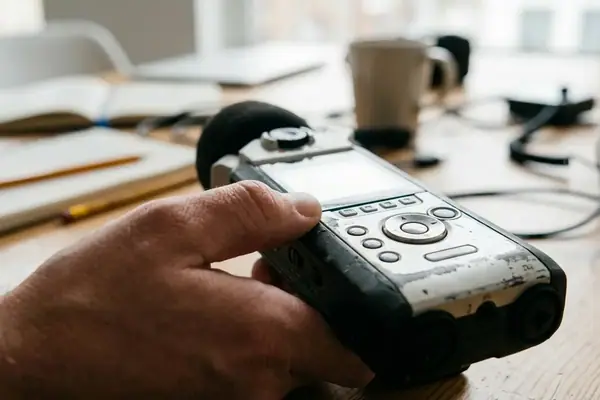
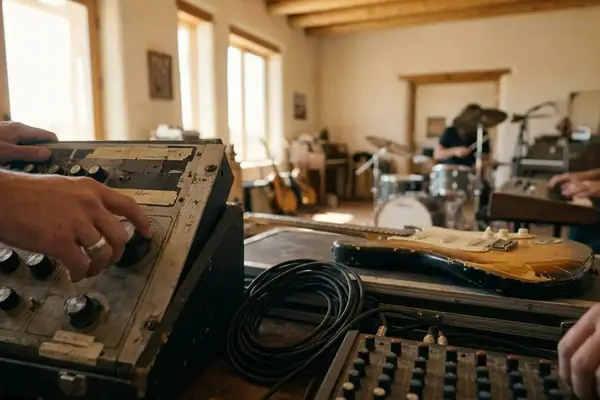
Executive Summary: The Power of Sonic Imperfection
A small room can still beat a perfect room
Lo-fi bedroom pop keeps surviving because it refuses the clean-room fantasy. It lets the recorder breathe. It lets the floor complain. It lets a vocal wobble just enough to remind you that somebody stayed up late and chose to leave the take alive.
In the Far West Texas rooms I keep walking into, the sound rarely begins with luxury. It begins with a desk, a borrowed interface, a cassette deck that eats the leader if you blink, and a singer trying not to wake the next apartment. That constraint does not shrink the song. Often, it gives the song its weather.
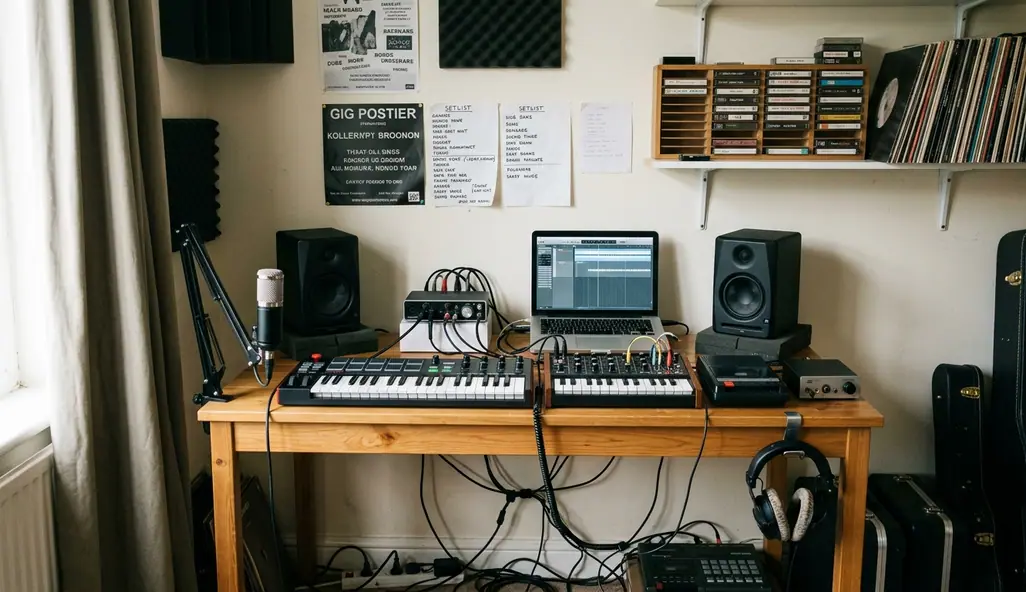
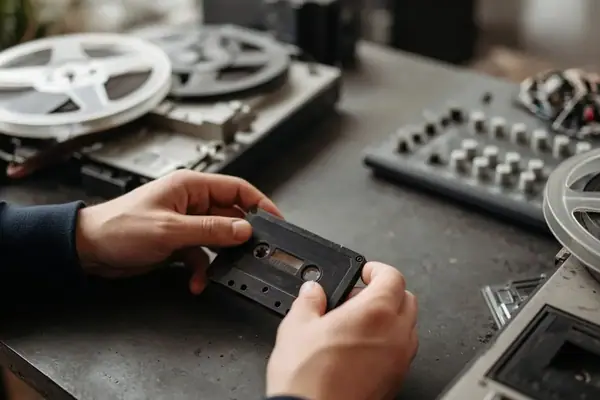
Tape hiss, room noise, and pitch drift are not random decoration when the artist knows what they are doing. They become marks of touch. A compact cassette moves at 1.875 inches per second, or 4.76 cm per second. At that speed, hiss, saturation, and softened transients are not theoretical defects. They are part of the tone before the first chorus arrives.
Key Takeaway: In lo-fi bedroom pop, imperfection works best when it carries intention: a room tone held open, a vocal left close, a bounced-down mix made to feel handled rather than polished clean.
The democratization of analog gear keeps feeding this. From around 2021 through 2024, underground release practice has leaned hard on home-recorded singles, cassette runs, direct-to-listener uploads, and small-batch dubbed tapes made in apartments, rehearsal rooms, and improvised home studios. Santa Rosa Records, an independent record label rooted in that listening habit, understands the draw: the obscure often arrives with dust still on it.
The Illusion of Pristine Audio
The clean option is real
The counter-argument deserves a fair listen. Modern production tools are astonishingly capable. A home-studio session can run at 24-bit depth and 44.1 kHz or 48 kHz sample rates, giving a bedroom producer enough headroom and clarity to cut a clean record without renting a commercial room.
From 2022 to 2024, machine-learning tools pushed that access even further. De-noising, de-reverberation, source separation, and pitch correction moved onto ordinary laptops. A singer can record beside a noisy window and remove much of the evidence later. A guitar can be tightened. A vocal can be tuned until it stops flinching.
When flawless turns ordinary
Here is where the shine starts to bother me.
A typical polished vocal chain may include comped takes, timing edits, pitch correction, subtractive equalization, compression, de-essing, saturation, and a final limiter ceiling around -1 dBTP before distribution. None of those steps are dishonest on their own. Used with care, they can serve a song. But stacked without taste, they sand the grain off the voice.
Critical review reveals a strange reversal: once pristine audio becomes easy, pristine audio stops feeling rare. The listener no longer hears access. The listener hears default settings.
That is why imperfection now carries a different kind of value. Not because dirt is morally superior. Not because a bad mix becomes deep if you bury it in hiss. The value comes from risk. A cracked note, a visible edit, a mic too close to the mouth: these choices can show where the performer stood and what they refused to hide.
Pro Tip: If a mix feels emotionally blank, do not add noise first. Pull back one layer of correction and listen again. Sometimes the life is already there, trapped under cleanup.
Why the Hiss Matters: Intimacy Over Fidelity
The sound of being in the room
Hiss has a physical kindness to it. So does vinyl crackle, when it is not pasted on like stage fog. Low-level continuous noise can mask abrupt edit boundaries, but the deeper trick is emotional. It gives the ear a floor to stand on.
I listen for the breath before the first lyric. The chair shift between takes. The little scrape of a fingertip against a string before the chord lands. These are not studio mistakes in the old moral sense. They are location data for the heart.
Room tone can be captured by leaving a microphone open for roughly 10 to 45 seconds before or after a take. That bed of air lets edits feel like they remain inside the same physical space. In bedroom pop, that space matters. A vocal cut against dead silence can feel like a face pasted onto glass. A vocal with air around it feels seated, nervous, present.
Environmental bleed as witness
Common bedroom-pop bleed includes HVAC rumble, floor creaks, chair noise, street traffic, pick scrape, finger movement on strings, and headphone spill from a guide track. The passing car is the one I trust most. It enters without asking. It dates the take to a specific minute.
That detail changes the listener's posture. Instead of imagining a flawless booth, you imagine a person near a window, trying to keep the chorus steady while the outside world keeps moving. The song becomes less like a product and more like a visit.
This is where the underground scene thrives: vulnerability without announcement. Nobody needs to write a manifesto on the tape shell. The hiss does enough talking if the performance has blood in it.
Warning: Noise added after the fact can crowd the lyric. If hiss, crackle, and flutter all compete with the vocal, intimacy turns into camouflage.
The cultural part matters too. The preservation of analog audio characteristics reminds us that recorded sound is not only information. It is also format, wear, and trace. Bedroom pop understands that instinctively.
The Artifacts of the Trade
Start with the machine, not the fantasy
A four-track cassette does not flatter indecision. A standard compact cassette uses 3.81 mm-wide tape, and four-track recording divides that narrow surface into multiple tracks. Noise and crosstalk are not abstract flaws. They are the walls of the room.
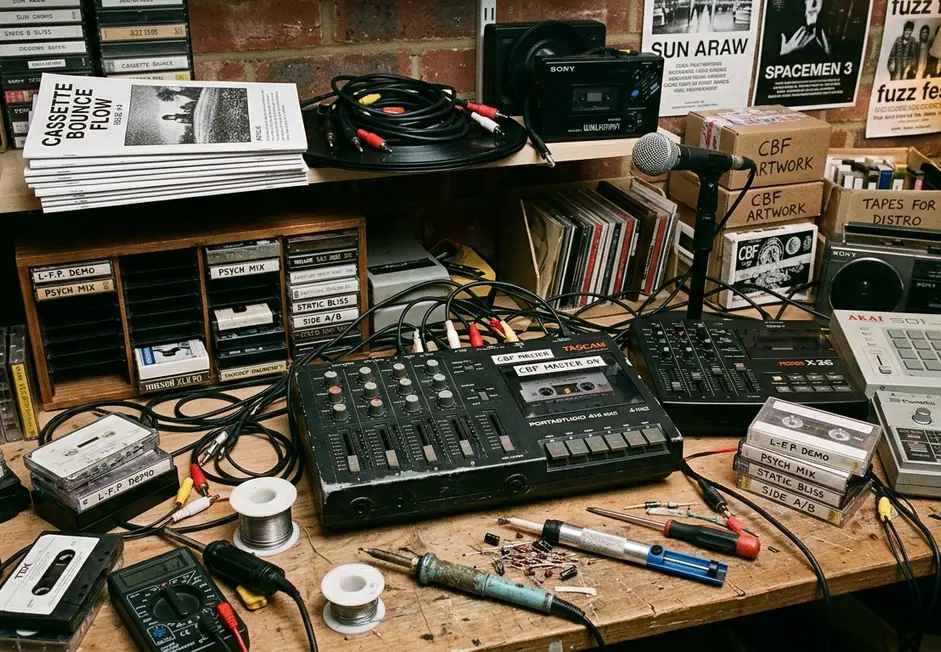
A practical four-track workflow usually starts with commitment. Record bass. Record guitar. Print keys. Add a vocal. Then route several tracks to one open track to free space for more overdubs. This is the old pressure: decide now, live with the decision later.
Lay down the part that defines the song's spine, usually the drum loop, bass, or main guitar figure.
Record the supporting part while listening for collisions, not perfection. If the guitar masks the vocal, move the chord shape or the mic before reaching for an equalizer.
Bounce the strongest parts together when the arrangement needs space. Printing a submix through the recorder's electronics and tape path can add hiss, soften high-frequency detail, smear transients, and glue separate parts into one shared texture.
Leave one track for the element that must feel human: lead vocal, counter-melody, or a damaged little keyboard line that answers the hook.
Portastudios, SP-404s, and cheap microphones
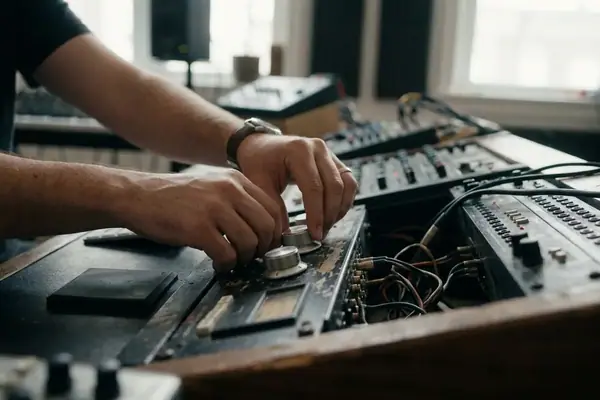
The Tascam Portastudio remains beloved because it makes arrangement physical. You run out of tracks, so you stop decorating. You ask whether the second guitar matters. You ask whether the chorus can survive with one keyboard instead of four.
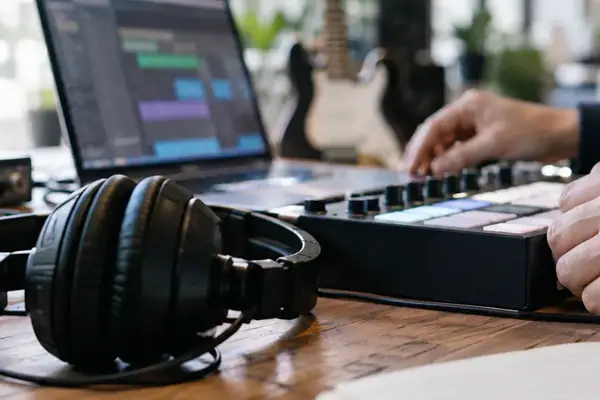
The Roland SP-404 family works from another angle. Pad-based triggering, resampling, pitch shifting, and built-in effects make it useful for degraded loops, chopped drums, and smeared vocal fragments. It turns time into a surface you can hit with your fingers.
Then there is the thrift-store dynamic microphone. Close to the mouth, usually within 5 to 15 cm, it can catch a direct vocal while still letting room reflections and handling noise remain audible. That closeness creates a different kind of honesty. You hear lip noise. You hear the singer back away on the loud line. You hear technique and fear sharing the same cable.
Pro Tip: Before bouncing down, write one sentence that names the job of each part. If two tracks have the same job, mute one and see whether the song gets braver.
Scope and Limitations: When Hiss Isn't Enough
Test the song before praising the dirt
Lo-fi texture cannot rescue a song with no melodic center, no rhythmic commitment, and no emotional delivery; it can only deepen material that already has a pulse. That is the line I keep coming back to when a mix sounds beautifully ruined but says almost nothing.
A useful pre-release check is simple: mute tape-emulation, vinyl-noise, saturation, and warble effects for about a minute or two. Then ask whether the hook, vocal intent, and harmonic movement still register. If the answer is no, the problem is not fidelity. The problem is the song.
The failure case is common and cruel. A weak one-take vocal printed through cassette hiss still sounds weak if the melody wanders, the lyric has no point of view, and the arrangement never turns. The hiss may make it blurrier, but it will not make it truer.
When clean is the braver choice
Context decides more than ideology. An intimate bedroom ballad may benefit from room noise and tape drag. A club-facing track, film-sync cue, or radio edit may need cleaner stems, controlled low end, and fewer accidental artifacts.
Digital tape-style effects expose themselves when wow, flutter, hiss, and high-cut filtering all get exaggerated at once without changing the arrangement or performance. That is costume, not process. The listener can feel the difference between a track shaped by limits and a clean file wearing a fake bruise.
For cassette-style mixes, vocals usually need enough consonant clarity in the 2 to 5 kHz range to survive small speakers, because hiss and guitar fuzz can mask lyric intelligibility. This is not a betrayal of lo-fi. It is care for the lyric.
Key Takeaway: True bedroom pop balances raw sonic texture with genuine emotional delivery. The noise should deepen the performance, not excuse it.
So yes, let the machine speak. Let the room leak in. Let the cassette soften the edge until the guitars feel sunburned. But keep the song accountable. The underground does not thrive because it rejects craft. It thrives because it knows craft can look like a hand hovering over the stop button, choosing not to erase the moment that made the take feel alive.