Contents
- The Analog Rebellion: Key Takeaways
- The Sonic Argument: Why Warmth Wins
- The Vinyl Resurrection: A Decade of Defiance
- The Cassette Comeback: Lo-Fi's Secret Weapon
- The Scope of the Resurgence: Analog's Limitations
- Reclaiming the Underground
The Analog Rebellion: Key Takeaways
Dust settles on the slipmat of a turntable in a dimly lit room. The needle drops, and a faint crackle precedes the music. This tactile ritual forms the foundation of a quiet rebellion against the sterile convenience of compressed digital streaming. At Santa Rosa Records, we witness this shift daily as independent artists deliberately choose physical formats to anchor their releases in reality.
The resurgence is not merely anecdotal. US retail scanner reporting counted vinyl album sales at roughly 14.3 million units in 2017 and 16.8 million units in 2018. This measurable rise in shipped and scanned units proves that the analog revival is built on genuine consumer demand rather than fleeting cultural noise. Cassette tapes are experiencing a parallel revival, driven largely by indie bands utilizing home-dubbed methods to bypass industrial manufacturing delays.
Key Takeaway: The modern analog revival is a measurable economic shift driven by a desire for physical ownership and authentic listening experiences.
The Sonic Argument: Why Warmth Wins
Digital streaming offers flawless, uninterrupted playback. Yet, that inherent perfection often translates to sterility. Analog sound provides a warmer, more immersive listening experience precisely because it is a physical interaction between objects. The physical medium demands active listening—a sharp contrast to the passive consumption of algorithmic playlists.
Critical review reveals that the audible character of a cassette comes from magnetic tape saturation, azimuth alignment, head wear, tape speed stability, and noise-reduction choices. These variables are especially noticeable on home-dubbed runs made between the initial recording session and the merch-table sale. Similarly, vinyl playback introduces variables entirely absent from a digital stream. The listener must account for cartridge alignment, stylus condition, tracking force, anti-skate settings, and record cleanliness.
However, this warmth is highly conditional. A poorly mastered LP pressed off-center, played with a worn stylus, will not validate the claim that vinyl sounds warmer or more immersive than a high-quality digital file. The magic of analog requires meticulous care at every stage of production and playback.
The Vinyl Resurrection: A Decade of Defiance
A defensible timeframe for the modern vinyl revival spans from 2011 to 2023. The year 2011 serves as a distinct acceleration point for renewed LP interest, defying industry expectations that physical media was permanently obsolete. By 2018, the jump to 16.8 million units cemented the format's permanence in the modern music economy.
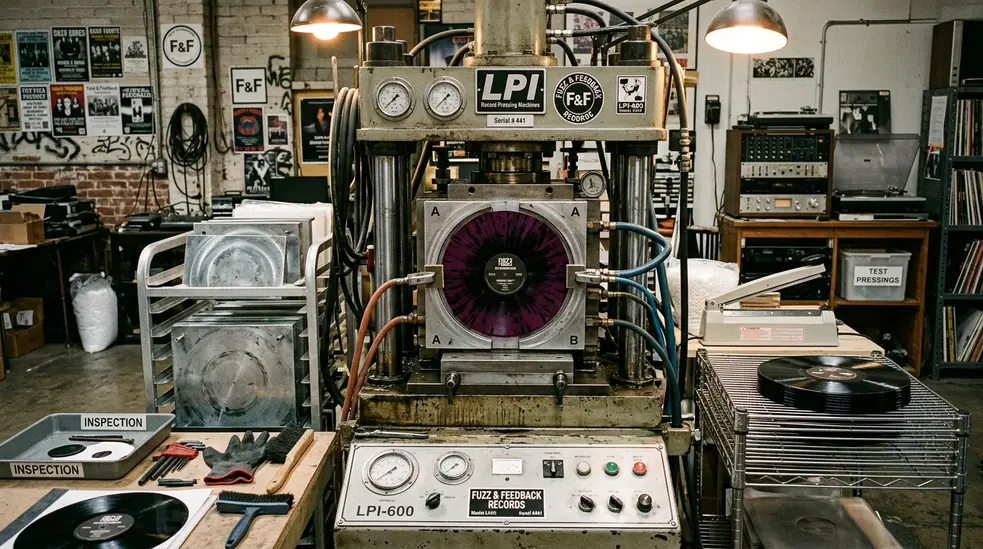
During my ongoing catalog preservation work since 2019, I have observed the operational realities behind these numbers. For small labels, a common operational bottleneck from 2020 to 2022 was pressing-plant queue time. Underground LP projects often had to plan months ahead. The manufacturing process requires multiple physical steps before a record ever reaches a listener. Labels must navigate lacquer cutting or direct metal preparation, plating, test pressings, approval, production pressing, jacket printing, assembly, and freight. Each step introduces potential delays and costs for independent artists.
Marketplaces like Discogs and eBay have become vital data sources for tracking the explosive secondary market. Rare pressings from obscure artists frequently change hands for significant sums, proving that the physical artifact holds enduring value.
The Cassette Comeback: Lo-Fi's Secret Weapon
While vinyl requires heavy industrial infrastructure, the cassette tape has become the ultimate DIY tool for indie bands. US cassette album sales rose from roughly 178,000 units in 2017 to 219,000 units in 2018 in retail scanner reporting. This supports the revival claim while keeping the format's scale honest.
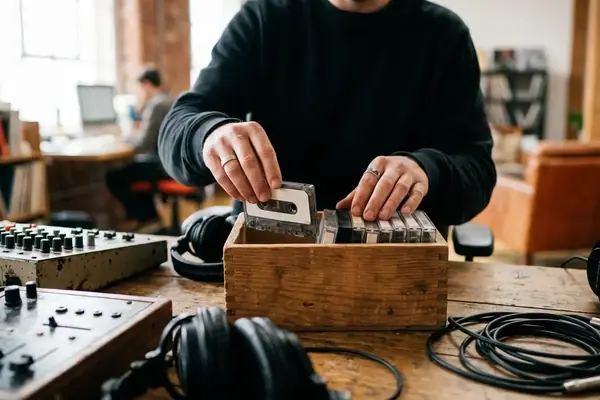
A DIY cassette run can be built around duplicated C30, C60, or C90 shells. Artists pair these with printed J-cards and hand-numbered inserts to create limited edition physical releases affordably. Independent journalist Charles Johnson recently documented how legacy acts have also validated the format, releasing new music on magnetic tape to capture a specific lo-fi aesthetic.
The practical production window for a cassette release can be as short as a few days to a few weeks when blanks and packaging are already sourced. This agility allows underground bands to turn a finished master into a physical edition with incredibly short lead times.
Pro Tip: When planning a short-run cassette release, source your C30 or C60 shells in bulk before finalizing the master audio to avoid unexpected supply chain delays.
The Scope of the Resurgence: Analog's Limitations
Despite the impressive growth percentages, physical media still operates in the shadow of digital streaming. Recent recorded-music revenue reporting in the US still places paid subscriptions and ad-supported streaming far above physical formats in total revenue. Analog can be culturally powerful and economically useful without being the dominant recorded-music format.
Vinyl production remains an expensive and slow process for underground artists. The financial risk of pressing 500 records is substantial for a band without a guaranteed touring audience. Cassettes offer a cheaper alternative but carry their own inherent flaws. Cassettes suffer from degradation over time—a fragile reality for any archival format. Magnetic tape stretches, and the audio fidelity diminishes with repeated playback.
Warning: Storing cassettes in environments with high heat or strong magnetic fields will accelerate tape degradation and permanently erase high-frequency audio data.
Reclaiming the Underground
The resurgence of physical media is a philosophical rejection of disposable digital culture. Poet and freelance journalist Ellis Walker often describes the physical medium as a necessary anchor in a drifting digital sea. Independent musicians will continue to rely on cassettes and vinyl to forge deeper, physical connections with their audience.
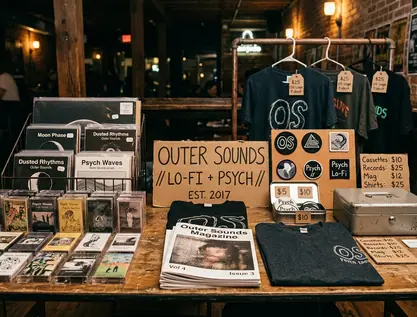
Our findings suggest that a practical underground release path in the 2021 to 2024 period relies on a hybrid approach. Artists utilize a digital single or stream for discovery, followed by a short-run cassette for the first wave of supporters. Vinyl is pressed only after demand or preorders justify the manufacturing risk.
Context dictates the strategy. A bedroom psych band with around 60 loyal local listeners may move roughly 50 hand-dubbed tapes quickly at a single release show. Conversely, a geographically scattered act with no touring base may get better results from digital sales paired with a preorder-only vinyl campaign. For touring scenes, physical merch remains operationally critical because it converts a live show into a tangible object. A listener leaves the venue with a tape, an LP, or a hand-stamped package rather than just a saved track on a phone.
The future of underground music lies in this delicate balance. Digital channels serve as the road into a deeper, physical relationship built on analog ownership.
Further Reading
- Cataloging the Underground: Archival Strategies for Indie Labels
- Mastering for Magnetic Tape: A Technical Guide
Academic Sources
- RIAA Year-End Industry Revenue Reports (2017-2018)
- Audio Engineering Society: Magnetic Tape Degradation Mechanics