Contents
- Key Takeaways: The Santa Rosa Records Sound
- The Four-Track Foundation and Analog Ethos
- Bridging the Gap: Digital Tools in a Lo-Fi Workflow
- The Mastering Process: Preserving the Grit
- Scope and Limitations of Underground Production
- From Master to Medium: Physical and Digital Distribution
Key Takeaways: The Santa Rosa Records Sound
The sound begins before the mix
Santa Rosa Records, an independent record label with dirt under its fingernails, treats lo-fi audio as a chain of choices rather than a plug-in preset. The tape machine, the room, the microphone, the pause before a take: all of it enters the record before mastering gets a vote.
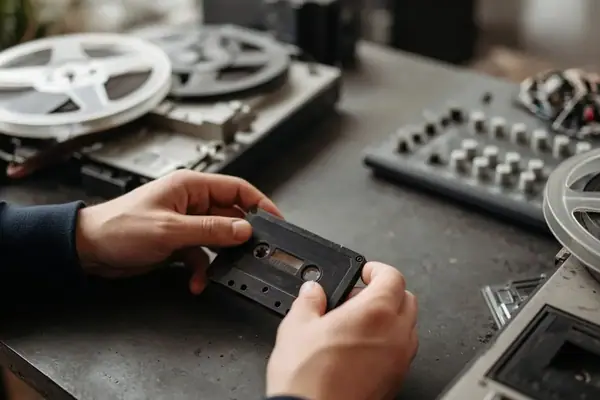
Analog recording remains the primary method for capturing the label’s rawest textures. Four-track cassette capture typically means narrow tape width divided across four tracks, so hiss, head-bump, saturation, and pitch movement become part of the performance. They are not decorations added after the song already works.
Key Takeaway: Mastering does not rescue a lo-fi recording by making it spotless. It protects the seams that prove the song passed through a living machine.
What gets protected
- Four-track grit, especially the soft compression that gathers around voice and acoustic attack.
- Unconventional microphone color, including telephone-receiver vocals that narrow the singer into a tense midrange band.
- Simple digital support parts, such as a bass drone, organ line, programmed pulse, or pad tucked beneath guitar.
- The final transferred stereo mix or four-track bounce, not an imagined clean version of the song.
Critical review reveals a useful distinction: the Santa Rosa Records sound is not anti-digital. It is anti-erasure. Digital tools can sit in the room, but they do not get to flatten the room.
The Four-Track Foundation and Analog Ethos
A room, a machine, and a limit
The scene is small enough to draw by memory: a cassette four-track on a table, a cable curled beside a coffee mug, the singer leaning toward a microphone that was never designed for glamour. The light is usually bad. The take is usually better for it.
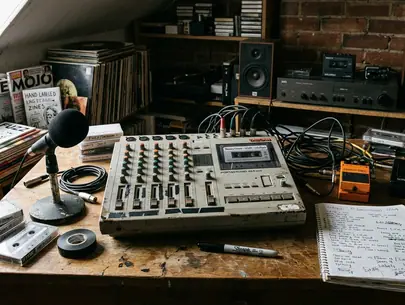
That constraint changes the emotional temperature. A performer hears the machine answer back. The hiss rises before the first chord. The track count forces choices early, before the arrangement can sprawl.
The analog foundation begins with commitment. The artist chooses the room, the tape speed, the microphone position, and the available tracks before the song expands. Common four-track cassette speeds are 1⅞ ips and 3¾ ips. The slower speed gives longer recording time; the faster setting usually gives better high-frequency stability and less obvious pitch drift.
Bobby T. Lewis and isolation as craft
Bobby T. Lewis offers the cleanest case study because his path from filmmaking into folk music already favors framing, distance, and isolation. Instead of treating the studio as a neutral box, his method makes the recording space part of the shot.
In an isolation workflow, each overdub pass demands patience: setup, level check, take selection, and rewind time can make a single pass feel like a small weather system. The reward is focus. The cost is that timing can stiffen if the performer stops listening like a bandmate.
The telephone receiver matters here. On songs such as “Moon Pie” and “Hidalgo Night,” that receiver is not an ornament. It narrows the voice into a midrange-forward band similar to speech transmission, changing proximity, diction, and harmonic texture at the source.
Pro Tip: Treat the strange microphone as the sound, not as an effect. If the receiver vocal carries the lyric, arrange around its midrange instead of burying it under fuzz.
Bridging the Gap: Digital Tools in a Lo-Fi Workflow
Step one: keep the controller small
Digital parts work best in this world when they behave like supporting players. A portable 25-key USB controller gives roughly two octaves of immediate note input, enough for bass figures, organ stabs, monophonic leads, and simple pad voicings. It does not turn the session into a full keyboard-production setup unless the artist lets it.
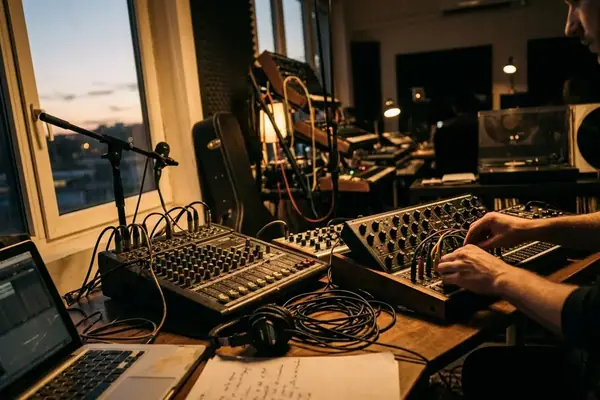
For Ghost Parliament and Lychnis, that restraint suits vintage pop and fuzz-folk. A USB-powered rig can shrink to a laptop, cable, headphones, and controller. That matters in bedrooms, trailers, rehearsal rooms, and borrowed studios where outlets and desk space run out fast.
Step two: print the digital part
- Load a lightweight instrument in software such as Bitwig 8-Track or Arturia V-Collection 6.
- Map one expressive control, usually modulation or filter movement.
- Record a simple part: one Mellotron-like pad, one sub-bass reinforcement, one drum-machine accent, or one doubled melodic hook.
- Print the part to audio before it starts inviting endless edits.
- Route it back into the mix so it answers the cassette material rather than floating above it.
The Akai Professional MPK Mini MKII suits sketching because its synth-action keys invite quick gestures. The Novation Launchkey 25 leans toward tighter software control. The Nektar IMPACT LX25+ gives a slightly broader control surface without breaking the small-room logic.
Creative variation and common mistakes
A single-note organ line can do more than a stacked chord patch. A quiet pad under acoustic guitar can thicken the room without announcing itself. A drum-machine click can become a nervous pulse rather than a grid.
The mistake is letting the cleanest signal dominate the dirtiest one. When a digital bass arrives too wide, too bright, or too steady, it exposes the cassette track as fragile instead of making it feel haunted.
The Mastering Process: Preserving the Grit
Start with the transferred truth
Mastering should begin with the actual transferred stereo mix or four-track bounce. Not the memory of the room. Not the fantasy version with the noise removed. The file on the desk is the record.
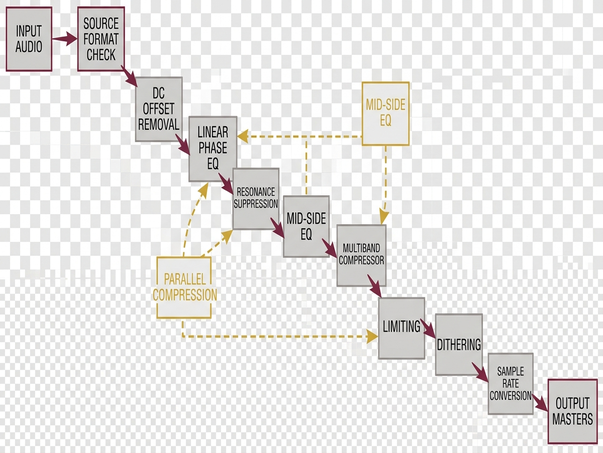
A first pass needs level-matched listening against the unprocessed transfer. Then come small moves: low-end containment, narrow harshness control, gain staging, and final limiting only after the song still feels like itself.
For Bobby T. Lewis’s “Hidalgo Night,” Chris Hanzsek’s kind of mastering problem is delicate. The cassette air around the vocal carries mood. Cut the hiss globally and the engineer may expose pumping, dull the cymbals, and remove the breath around quiet phrases.
Different source, different duty
Jesse Gilmore’s audio post-production work on Digitalia Records releases, including the “Shampoo Banana” single, sits in a related but not identical lane. Experimental material can tolerate wider noise floors, abrupt edits, and stranger distortion if those elements belong to the piece.
For a single like “Shampoo Banana,” post-production should document the delivered source format, sample rate, bit depth, peak headroom, and any intentional distortion that must not be treated as an error. That note-taking is not bureaucracy. It keeps the next engineer from fixing the point of the track.
Warning: Pushing every lo-fi master toward modern loudness can make tape saturation collapse into brittle distortion, especially on cymbals, tambourine, and sibilant vocals.
A realistic revision cycle for lo-fi singles runs through an initial pass, artist notes, one revision, and final export for physical and digital formats. The pace should leave room for ears to reset. Fast decisions often mistake shock for clarity.
Scope and Limitations of Underground Production
Limits are not automatically virtues
Underground production is shaped by constrained machines, irregular rooms, aging tape, and performers who often engineer themselves. That reality deserves romance, but not denial.
Four-track cassette recording limits arrangement density because every bounce compounds hiss, phase shift, and transient softening. Isolation recording can also make timing feel less communal. Without live bleed, overdubs need careful monitoring so the performance does not become stiff.
There is a sharp difference between Stray Owls-style fuzz-folk and the more experimental edge of Digitalia Records. Fuzz-folk usually needs midrange protection for voice and acoustic attack. Experimental tape pieces may welcome unstable pitch, hard edits, or a noise floor that behaves like weather.
Why the artifact sometimes stays
The useful question is not, “Can this flaw be removed?” The useful question is, “What job is this flaw doing?”
A telephone-receiver vocal may clarify a sparse acoustic song but disappear inside a dense fuzz arrangement unless the midrange is carved around it. Cassette hiss may soften the loneliness of a quiet take. A pitch wobble may make a chorus feel seasick in exactly the right way.
Still, this philosophy is best suited to releases where noise, saturation, and mechanical instability belong to the aesthetic brief; it is a poor fit for sessions that need clinical vocal tuning, sub-heavy club translation, or broadcast-style cleanliness.
Playback checks before confidence
A useful quality-control span covers several playback passes: headphones, small speakers, car stereo, a cassette deck if relevant, and a phone speaker for vocal audibility. The goal is not identical sound everywhere. The goal is recognizable intent everywhere.
Community feedback confirms what careful engineers already suspect: listeners forgive roughness faster than confusion. If the lyric vanishes, if the snare hurts, if the low end blooms into mud, the mythology of tape will not save the master.
From Master to Medium: Physical and Digital Distribution
Prepare by format, not by wish
The final master is not a single abstract file. It becomes a cassette side, a CD sequence, a Bandcamp upload, a DistroKid delivery, and a stream passing through loudness normalization. Each medium asks a different question.
CD delivery requires 16-bit, 44.1 kHz PCM audio, so higher-resolution masters need careful conversion rather than a casual last-minute export. Cassette sequencing needs a few seconds of pre-roll before the first transient. It should also avoid placing the loudest, brightest song where tape edge wear or duplication inconsistency will be most obvious.
A practical release handoff
- Export final audio for each format with clear naming.
- Check artwork against the physical and digital release plan.
- Enter metadata carefully for Bandcamp and distribution services such as DistroKid.
- Test the upload before announcing the date.
- Play the final sequence one more time, without multitasking.
A practical release handoff window gives enough time for final audio exports, artwork checks, metadata entry, test upload, and one last playback confirmation before public availability. Rushing this stage can make a lovingly damaged master feel merely careless.
For physical tape, a reference cassette should be auditioned from start to finish before approving a run. Duplication can change hiss profile, high-end clarity, and perceived vocal level. The master may be finished, but the medium still has a say.
The last comparison
Bandcamp rewards intimacy: notes, artwork, sequencing, and the feeling that a release came from a real room. Streaming services reward translation. Many systems apply loudness normalization around the mid-negative LUFS range, so an over-limited lo-fi master can lose punch without gaining lasting playback advantage.
That is the final discipline. The underground record should survive the algorithm without pretending it was born there. Ellis Walker, poet and freelance journalist, might hear the regional ache in that choice; Charles Johnson, independent journalist and author, might frame it as a release strategy. In practice, it is simpler: protect the source, respect the medium, and let the hiss speak only where it has earned the line.