When Promo Questions Flatten the Record
Ask about influences and an artist can reach for the same answer printed in the one-sheet. Ask about the album’s themes and the conversation may slide into a tidy summary polished through weeks of promotion. The words sound competent. The living record vanishes.
The revealing interview goes elsewhere. It enters the room where the microphones stood, follows a childhood sound into an adult arrangement, and stays with the moment when a song resisted its maker. These details bypass the rehearsed account and give the artist something physical to remember.
Clear the Rehearsed Ground First
I mark every influence, theme, and origin story already covered by the biography before writing the first interview question. Preparation works best a day to three days ahead: review the lyrics, credits, photographs, and available session notes, then flag claims that can be checked against personnel or track timings.
For a 35–50-minute conversation, spend the opening five minutes or so confirming factual ground. Give twenty to thirty minutes to the room, memory, and recording friction. Hold the last ten or twelve for omissions and follow-ups. Standard PR material still helps, but its limits become obvious when an independent artist retreats into a familiar answer.
When that happens, request one scene. Who was present? What equipment was running? What could be heard beyond the microphone? A polished statement begins to acquire floorboards, temperature, witnesses, and noise.
The seven-question chain: room boundary, involuntary childhood sound, uninvited lyric, session resistance, audible equipment fault, removed musical limb, and final reel arithmetic.
Put the Recording Room on the Record
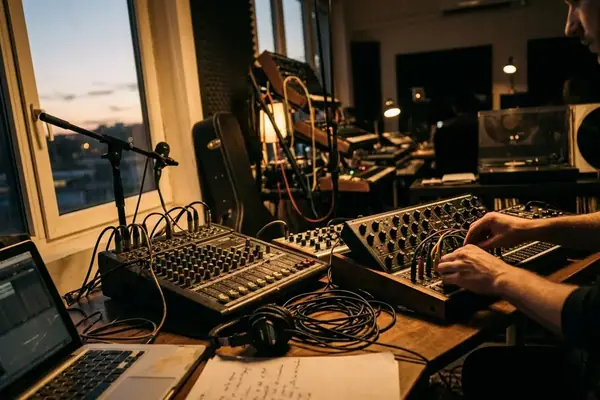
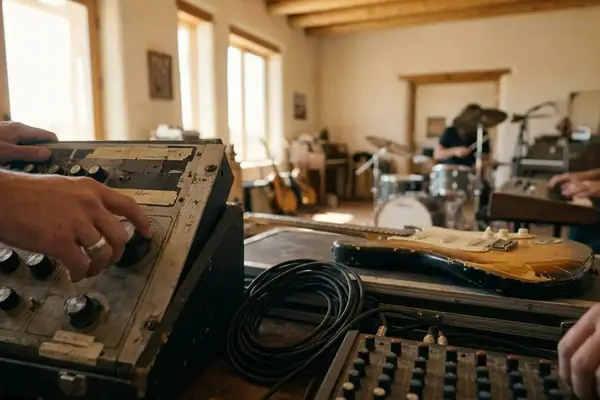
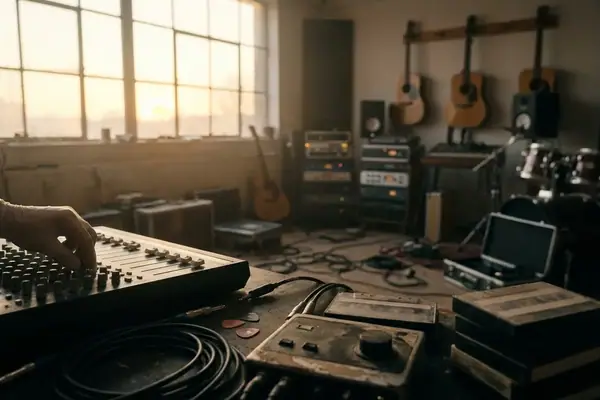
A lo-fi mix carries architecture inside it. A low ceiling changes reflections. Traffic or wind comes in through an open window. A garage door complicates isolation. Even a cramped bedroom leaves evidence through microphone distance, hard surfaces, and the quiet pressure of limited space.
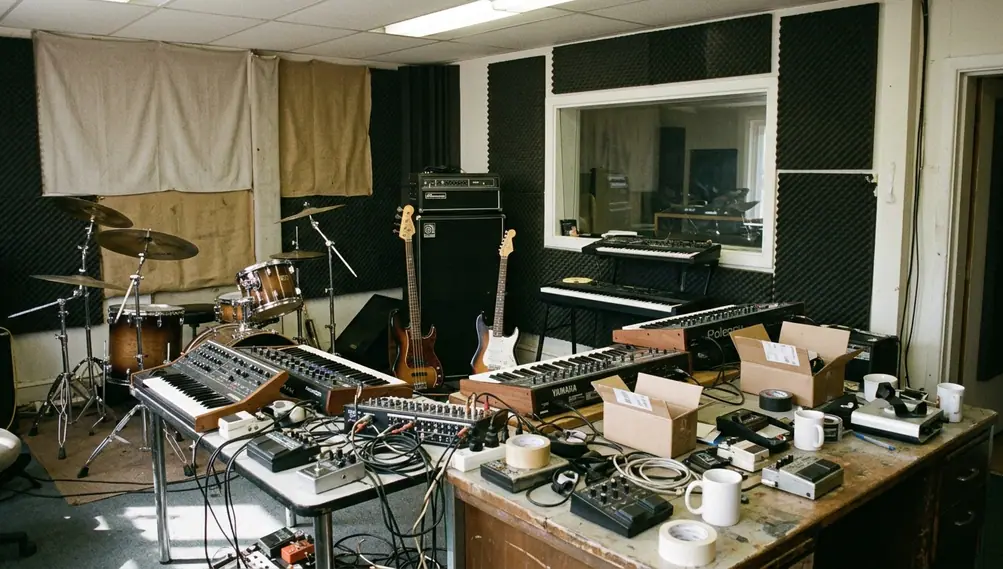
Question 1: How Did the Room Bleed Into the Mix?
Begin literally: “How did the physical limitations of your recording space bleed into the final mix?” Then follow the first tangible noun in the answer.
If the artist mentions a window, stay with it. Was it open? What came through it? Which microphone faced it? Document the room type, approximate dimensions, ceiling height, wall and floor surfaces, doors, windows, microphone distance, and recurring external sounds. The aim is a usable map of the sound rather than a decorative studio anecdote.
Next, ask for the track and timestamp where the condition can be heard. Play 20–40 seconds around that point. A longer excerpt helps separate persistent room tone from a single passing transient.
Question 2: What Time and Room Does the Album Inhabit?
Only after the physical description is clear, ask: “If this record was a specific time of day in a specific room, where are we?”
This is where documentation turns expressive. A dusty Far West Texas garage at late afternoon carries a different emotional temperature from a sealed bedroom before dawn. The answer may reveal how isolation shaped a vocal delivery, why a drone feels sun-struck, or why the mix seems to lean toward an unseen door.
Allow six to ten minutes for these two questions. The first secures the boundaries. The second lets the artist describe what those boundaries felt like.
Follow the Sounds That Arrived Before Taste
Influence lists are conscious objects. Artists arrange them neatly because names communicate lineage, scene, and taste. Memory behaves differently. It gives back a siren through a wall, an appliance cycling in another room, a voice from a hallway, or a musical phrase heard before its source was understood.
Question 3: Which Early Sound Still Hides Here?
Ask: “What is the earliest sound that terrified or mesmerized you, and how is it hiding in this album?” Then wait.
Leave ten seconds or so of silence. Filling that gap with suggested influences can steer the answer toward your language. Let the artist locate the scene independently, then record the place, approximate age, and whether the source was mechanical, environmental, musical, or vocal.
Trace the memory forward. Does its closest relative appear as a vocal shape, rhythm, drone, interval, or production texture? Ask for the album passage. The connection may be indirect, yet a precise comparison gives the reader something audible to test.
Question 4: Which Lyric Entered Without Permission?
The companion question narrows from sound to language: “Which lyric on this record arrived completely uninvited?”
Request the exact line and the circumstances of its arrival. A notebook page, voice memo, or early demo can establish what survived. Compare that source with the released version, noting whether the wording, melody, or placement changed.
Resist turning the answer into mythology. An unexpected line gains force through its documented path: where it first appeared, what surrounded it, and why the songwriter chose to leave it untouched or reshape it.
Listen for the Moment the Session Pushed Back
Underground records often carry the argument between intention and material. Tape transport wavers. A cable crackles. A room refuses the planned tempo. Musicians respond through another take, a microphone move, an edit, or a decision to accept the accident.
Question 5: When Did the Song Fight Its Plan?
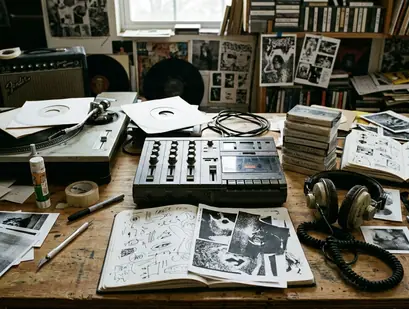
Establish the intended arrangement, tempo, or tone first. Then ask: “At what point during the tracking did the song actively fight back against your original vision?”
Locate the turning point and play half a minute either side of it. The comparison matters. It can show whether the response was a new take, tempo change, microphone adjustment, edit, or surrender to an accidental sound. “It became rawer” carries little weight until the listener can hear where and how.
Question 6: Which Fault Became Part of the Music?
Ask: “Which piece of broken or malfunctioning gear became the secret weapon of this release?” Identify the device, the fault, the safe workaround, and the passage where its effect survives.
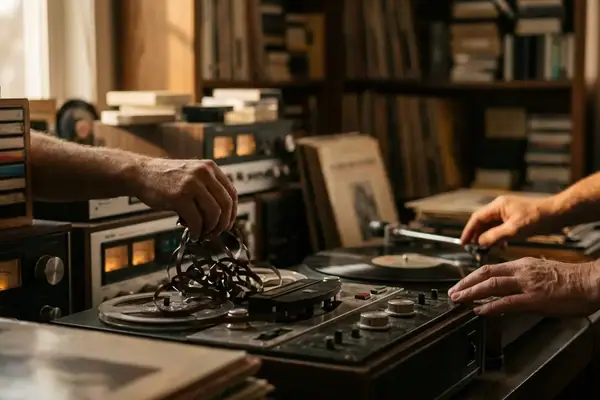
Keep the mechanisms separate. Tape hiss is broadband noise. Saturation compresses peaks and adds harmonics. Wow and flutter describe speed variation. A dirty switch or failing cable can produce intermittent crackle. Calling all of it “tape warmth” erases the useful part of the answer.
Do not energize equipment with exposed mains wiring, smoke, overheating, or an unknown fuse substitution for the sake of a story. The recorded result is the evidence; reenactment adds danger, not truth.
For an entirely software-based session, translate the question. Buffer latency, destructive editing, plug-in instability, or a lost session version can create comparable resistance. The format changes. The confrontation between plan and process remains.
Measure the Album by What It Excludes
Finishing demands a cut somewhere. A bridge may explain too much. A solo may disturb the sequence’s pressure. Ambience that once held the track together can become weight after the vocal settles.
Question 7: What Had to Be Removed?
Ask: “What was the most painful amputation you had to make to finish this record, and why did it have to go?”
Name the removed object first: song, verse, bridge, solo, overdub, or stretch of ambience. Then establish when the decision happened, who argued for it, what function the part once served, and what became clearer after its removal. Comparing the penultimate sequence or mix with the released master can turn an abstract claim about restraint into a specific editorial decision.
Use precise language about the operation. A bridge might be bypassed during tracking, muted in the mix, removed through a digital edit, or excluded during sequencing. Omission alone does not prove that anyone cut magnetic tape with a razor.
Analog arithmetic still gives the question weight. A 2,500-foot reel running at 30 inches per second provides 1,000 seconds of recording time: 16 minutes 40 seconds. Tape width and track count do not alter that linear capacity. A continuous 35–45-minute program at the same speed consumes 5,250–6,750 linear feet before additional takes, count-ins, leader, or spacing enter the calculation.
The finished album is therefore shaped by absent sound as deliberately as present sound: at 30 inches per second, a 45-minute program travels across 6,750 feet of magnetic ribbon.