A Green Room Goes Quiet
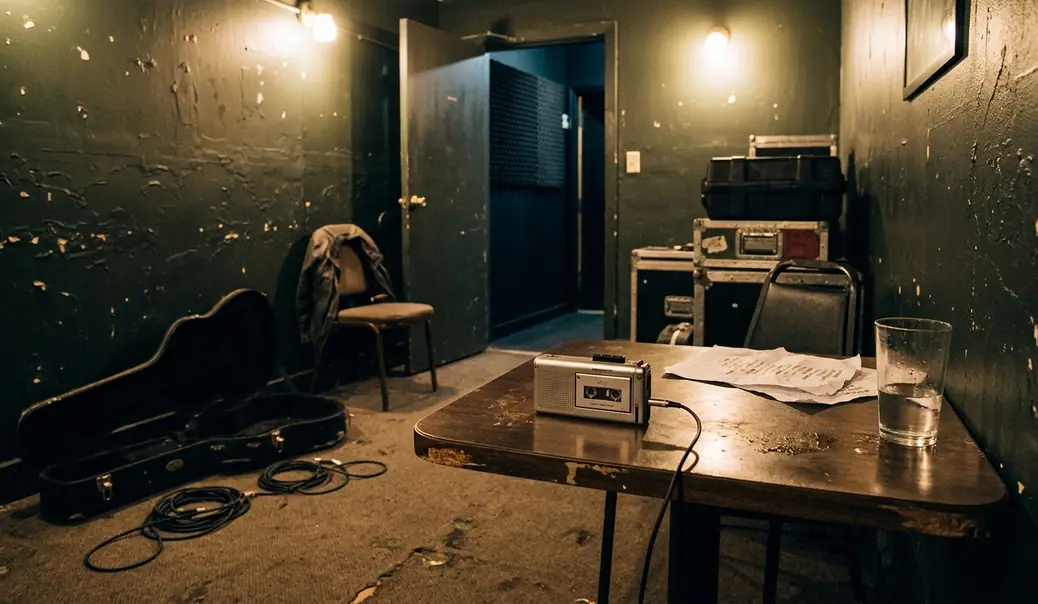
Picture a dim venue green room, a microcassette recorder on a sticky table, an artist still carrying the noise of the set in their ears. The interviewer leans in and asks, “So, who are your biggest influences?” The room goes flat. A moment ago, there was a record to talk about. Now the artist has to produce a list of names.
That question is a journalistic dead end. It turns lived creative decisions into a roll call of recognizable bands. The answer might give a reader a rough listening reference, but it rarely explains why a vocal distorts halfway through a verse or why a drum sounds as though it came from the next room.
I would rather begin with something the artist actually made. Find one audible choice, ask how it happened, then follow the answer into the recording space and the decisions that nearly went another way. For independent lo-fi and psychedelic artists, those details often carry the story that a list of influences leaves untouched.
The Names That Swallow the Record
An influences question asks a musician to sort their work before describing it. They must translate a personal practice into names a publicist can repeat, a reader can recognize, or a recommendation system can file under a genre. That pressure shapes the answer. An artist may reach for a rehearsed comparison, defend against an obvious one, or name a connection they barely feel because silence would be awkward.
Consider a distorted vocal on a current release. A lineage of singers might tell us what else the artist enjoys. It cannot tell us whether that vocal went through a damaged input, an overloaded pedal, or a deliberate mix decision. Those are different accounts of the sound in front of us, and each gives the artist room to describe an action rather than accept a category.
Emerging artists can feel this most sharply when they are trying to bend inherited sounds into unfamiliar shapes. A genre label may help someone find the record, yet it can also make the interview circle around resemblance. The track itself offers a better follow-up: “That voice breaks up on the last line. What changed there?” Listen to the answer before supplying a comparison.
A Narrow Exception
An established act may enjoy talking about its heroes. The problem arises when that question becomes the whole interview, especially with an artist whose recording resists an easy family tree. If a musician brings up an influence unprompted, ask what they borrowed, changed, or left behind.
Follow the Hiss to Its Source
Before pressing record, choose one detail you can hear clearly enough to describe. It might be hiss behind a quiet verse, a vocal that frays at the edges, or a note that arrives a little late and stays in the mix. Write down where it occurs. Your preparation gives the artist something more precise to respond to than a request to explain their entire sound.
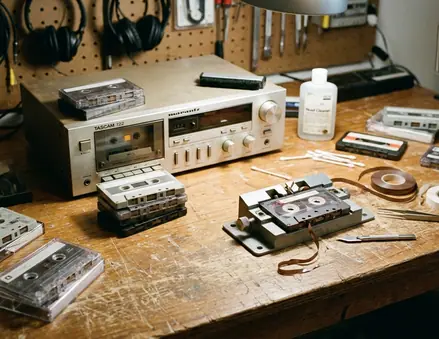
Start at the point where sound entered the recording. “Where did that tape hiss enter?” leaves open the possibility that it came from the recording medium, another piece of equipment, or a later choice. Follow with the equipment used, the adjustment made during the session, and the reason that version survived the final mix. Each answer supplies the next question.
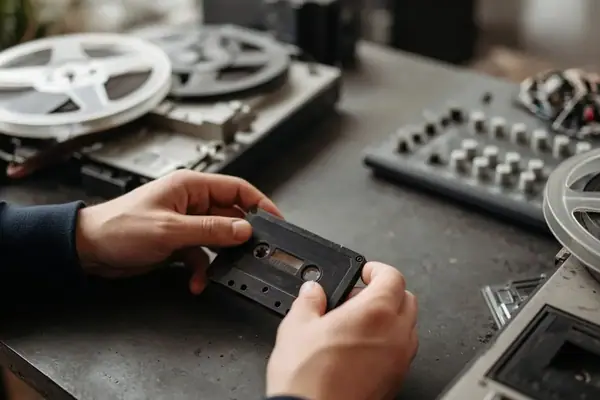
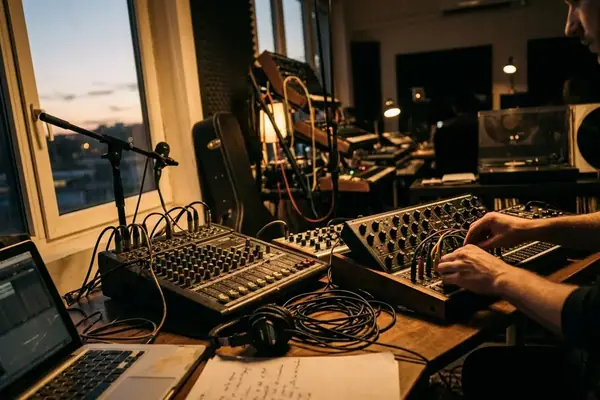
For a distorted vocal, ask, “What was the signal chain on that track?” If the artist names a broken four-track cassette recorder, get specific: what was broken, and what changed in the recorded voice? A malfunctioning delay pedal deserves the same care. Faulty equipment can interrupt a session as easily as it can shape a sound. Let the artist tell you which happened.
The Kept Mistake
Try “Why did you leave that mistake in the final mix?” only after you know the artist hears it as a mistake. Sometimes a listener’s apparent slip is a deliberate pause or an instrument answering another one. Ask what they heard on playback, who wanted to keep it, and what the track lost or gained when they made that choice.
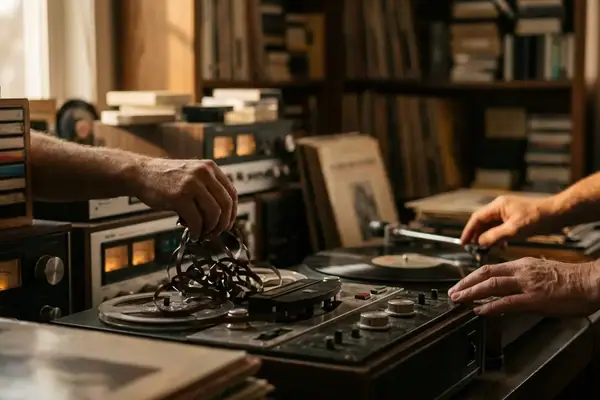
This is where a conversation can loosen. Tools have switches, faults, and limits an artist can point to. A description of someone reaching across a recorder to lower a level puts the reader closer to the music than another tidy genre tag.
Ask What the Room Did
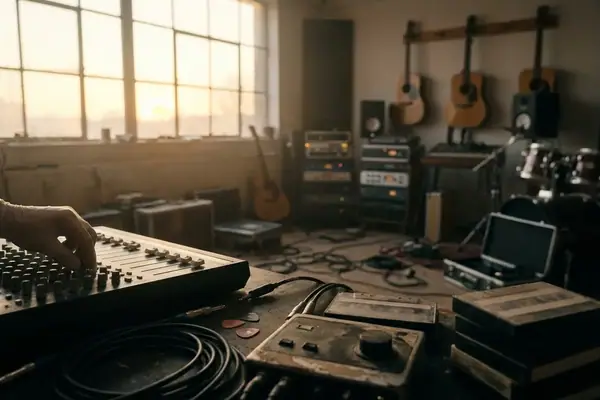
Move from the sound to the place where it was captured. Where was the track recorded? What could the artist do in that room, and what did its acoustics make difficult? Ask whether the drums were tracked in a small treated room, a reflective room, or somewhere else they can identify. Then ask what the microphones heard there.
Far West Texas offers an interviewer a vivid place to investigate. Distance between collaborators might affect when songs get finished. A local scene might change who plays together or where a band rehearses. The open landscape may matter deeply to an artist’s writing. None of those connections should be supplied for them. They have to describe the link between place and record.
Desert Isn't Reverb
When a guitar seems to trail into open space, locate the effect before writing about the horizon. Was that tail present in the room, produced by a pedal, or added during mixing? Ask what the artist heard while playing and what appeared only on playback. A room can color a recording; so can a decision made long after the musicians have gone home.
I like the question “What could you hear from where you were standing?” It invites a physical answer: another player, the amplifier, the room returning a sound. From there, you can ask whether that placement changed the take. Geography becomes useful reporting when it leads to a verifiable choice, rather than serving as atmosphere pasted over a track.
Stay With the Difficult Take
A finished record hides its discarded routes. Ask the artist to reopen one. “Which song on this record fought you the hardest?” gives them room to name an arrangement, a piece of gear, or a part they could not settle. Follow the sequence: what did they try first, what went wrong, who proposed the change, and what reached the released recording?
“What was the worst idea you tried in the studio that led somewhere useful?” can draw a more revealing answer than a question about the album’s proudest moment. The useful part matters. A failed attempt may have exposed a quieter arrangement or made an unwanted sound worth keeping. It may also have led nowhere; there is no need to force a breakthrough onto the tape.
Keep the story tied to these sessions. An abandoned track, blown amplifier, or disputed arrangement belongs in the piece only if the artist says it was part of this record’s making. Then check the chain of events. Which track? Which take? Did the change happen during recording or in the mix? Friction becomes a scene a reader can understand when the decisions remain in order.
Fifteen Minutes, One Scrape
Here is a hypothetical backstage interview you can copy. Before meeting the artist, listen to the latest release and mark one odd sound. For this example, track three contains a metallic scrape at 2:14. Write the track and timestamp in your notes, along with three questions: what made it, where it was recorded, and what changed before the mix was finished.
- Minutes 1–3: Find the source. Start with “What is that metallic scraping sound at 2:14 on track three?” Let the artist identify it before guessing. In this exchange, they say a metal stool dragged across the floor during a take. Ask whether the movement happened while someone played and whether they heard it at the time. Note their exact description of the sound.
- Minutes 4–8: Enter the room. Ask where that take was recorded and how the room affected the scrape. Suppose the artist says the room was reflective and the microphone caught the stool from across it. Ask where the microphone stood and whether they moved it for another take. You now have a physical sequence: stool, floor, room, microphone. Keep any claim about acoustics attached to what the artist actually describes.
- Minutes 9–15: Reconstruct the revision. Ask what they did after hearing the take. In this example, the artist says they tried a cleaner pass, then kept the earlier one because the scrape landed against a pause in the arrangement. Confirm whether the released version uses that earlier take, which part was revised, and whether the scrape remained untouched in the mix. Read back the track, timestamp, source, and order of decisions before they leave.
On your way out, write the account in plain sequence: at 2:14 on track three, a stool moved during a take; the room and microphone caught it; the musicians tried another pass; they chose the earlier take for the released arrangement. Check those notes against the recording and the artist’s words before publication. You have a story about a sound the reader can hear, and a clear path for reporting the next one.