The Bottom Line on Small-Batch Tape Runs
Before the first cassette sells, the label has paid for a master, duplication, cases, printed inserts and packing supplies. Misjudge that outlay and a release meant to live in coat pockets starts taking rent money while boxes of unsold tapes gather dust in a closet.
A 100-cassette run rarely promises significant profit. Its steadier purpose is to give committed listeners something they can hold and give the artist a calling card that survives a passing mention online. Santa Rosa Records has to treat that cultural value seriously without letting it erase the cash ledger.
Count the Sellable Shells
Begin with the full run, then remove every copy already spoken for. In the illustrative release used here, 20 tapes go to the artist and 10 go to promotion. That leaves 70 available for sale. The master, duplication and J-cards have to earn their way back through those 70 tapes, not through the 100 shells arriving in the box.
The Seventy-Tape Ceiling A copy handed to the artist or mailed for coverage may do valuable work. It cannot also appear in the retail sales forecast.
The main expenses sit in different parts of the process: cassette-specific audio preparation, physical copying, artwork and cases, order packing, postage, and the artist’s agreed share. Put each on the ledger before choosing a retail price. A tape can look inexpensive at the duplication stage and become costly by the time it reaches a listener’s door.
Audio Preparation and Duplication Expenses
Finish the sequence and decide where each side ends before paying for a cassette master. A side break changes the experience of a release; it also determines the program length the duplicator must handle. A C-20 holds 20 minutes across both sides, while a C-60 holds 60. At the same tape speed, a loaded C-60 shell needs three times the tape length of a C-20. Ask for quotes by program length rather than assuming the blank shell has one fixed price.
Hear the Tape Before the Run
A streaming master is a useful reference, not an automatic cassette master. Magnetic tape brings saturation, hiss and a narrower high-frequency response into the room. EQ that keeps a brittle guitar clear online may make it harsh on tape; heavy compression may leave the hiss more exposed in a quiet passage. Prepare a tape-specific master, then audition a test copy on a working deck before authorizing the full run.
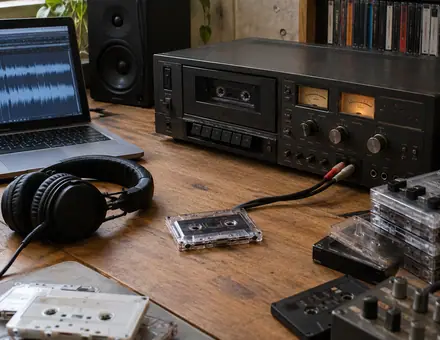
Picture a low, hazy vocal settling against a guitar as the first side nears its end. The pause before the flip can feel deliberate and intimate. Technically, it depends on a sequence that fits its sides and a test copy that lets the label hear what the duplication process actually preserved.
Real-Time or High-Speed Copying
Request real-time and high-speed duplication quotes using the same approved master, tape length and packaging specification. Real-time copying runs the program at listening speed and can appeal when fidelity is the priority. High-speed copying can reduce manufacturing cost per unit, though the audible result deserves the same test-copy scrutiny. Comparing unlike specifications hides the trade-off.
Time matters, too. One recorder making one copy at a time needs 20 to 60 minutes of program playback for a C-20 or C-60, before rewinding and inspection. A commercial facility can use multiple recording positions. DIY copying also puts head wear and bias calibration on the label’s checklist; an uneven setup can make copies of the same release sound unlike one another.
Approve the Test Copy Listen to the quietest passage, the brightest passage and both side endings before giving a duplicator the go-ahead.
The Hidden Drain of Packaging and Postage
The recorded shell is only part of the object. A multi-panel J-card needs printing and careful folds; a clear or tinted Norelco box protects it and gives the artwork its frame. Shrink wrap or an O-card changes the look again, along with the bill. A spare sleeve around a rough-edged cover might suit a bedroom recording. Glossy wrap might suit a different release. Choose the finish for the music and its listeners, then price the finished object.
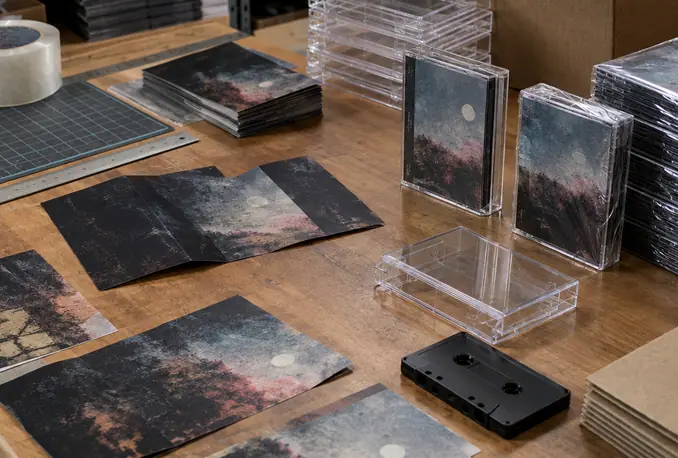
Make one complete cassette before ordering the rest. Fold the insert, place it in the case and check whether the spine remains readable. That small rehearsal catches a practical problem an artwork file cannot show: a crowded title disappearing into a crease.
Pack One Order, Then Set Postage
Put the finished case in a corrugated cardboard mailer and add protective padding where needed. Count the mailer, packing tape and address label for every shipment. Weigh a packed sample before setting a shipping charge; the weight of a bare cassette tells only part of the story. Postage comes on top of those supplies.
For domestic U.S. orders, check current commercial base pricing for media mail and confirm the shipment meets the applicable mailing conditions. International postage can exceed the cassette’s selling price, so a single flat charge can quietly consume the contribution from an overseas order.
There is time in the parcel as well as money. At a planning allowance of 5 to 10 minutes to pack and label each of 100 separate orders, fulfillment takes 8 to 17 hours. That excludes messages from buyers and trips to post parcels. Folding inserts and closing cases add work before an order even reaches the mailer.
The Packed-Weight Check Set shipping from a sealed sample parcel, with its padding and label in place, rather than from the cassette case alone.
Artist Splits and the Break-Even Horizon
Agree on the artist’s share before placing the duplication order. One arrangement divides the physical inventory, leaving the artist free to sell their copies. Another pays an agreed percentage of net sales after specified costs have been recouped. Those approaches send money through different hands and produce different break-even points. Write down which costs count toward recoupment and who pays to mail the artist’s copies.
Promotional copies need a line of their own. Tapes sent to college radio, underground music magazines and publicists may help a release travel beyond its existing audience. They also shrink the stock available to repay production. In this example, the artist takes 20 copies and promotion takes 10; 70 of the 100 remain for retail.
Run the Recovery Calculation
- Total the prepaid costs. In this illustrative ledger, mastering costs $140. Duplication, cases and printed inserts cost $460. The prepaid total is $600.
- Find each sale’s contribution. At a $15 retail price, subtract $5 in per-order packing and transaction costs. Each sale contributes $10 toward the prepaid total. Postage is charged separately.
- Divide cost by contribution. The $600 prepaid total divided by $10 per sale means 60 sales recover those stated costs. Of the 70 retail copies, 10 would remain unsold at that point.
This threshold assumes the artist receives copies instead of a per-sale payment. Change that split or absorb postage into the sticker price and the calculation changes. The 60-sale figure also leaves packing labor unpaid. It describes recovery of the stated bills, not a wage for the person filling the orders.
Keep a running ledger for actual sales. Enter the retail receipt, subtract the costs attached to that order, and apply the remainder to the prepaid balance. The full $15 in a buyer’s hand is not $15 recovered.
The Final Ledger
At two in the morning, someone sits on the dusty floor of a Marfa studio, pressing creases into freshly printed J-cards. Printer ink still has its sharp smell. A Norelco box clicks shut; another joins the row beside a stack of cardboard mailers waiting by the door.
The fourteenth cassette sold brings the running contribution to $140. That clears the mastering line in this example. The remaining $460 of prepaid costs still sits on the page, beside the next address to print. One more J-card folds along its spine, and the next case snaps closed.