Why the Best Underground Curation Happens on the Graveyard Shift
The true vanguard of underground music discovery lives in the rigid, non-interactive medium of live, late-night community radio broadcasts. When you hand control of the sequence over to a human selector operating in the small hours of the morning, you encounter records without steering each next choice through an algorithmic feedback loop. That curatorial conviction shapes everything we track across regional streaming gaps and midnight airwaves.
If you want to unearth rare lo-fi, psychedelic, and Far West Texas indie sounds, you need a deliberate routine:
- Target non-commercial frequency blocks between 11:00 PM and 4:00 AM in the station's local time.
- Time-shift overnight broadcasts using a station's published 14-day archive player before the audio expires.
- Cross-reference digital playlist databases with photographed handwritten DJ logs to catch small-run release details.
- Purchase the physical or digital releases directly from the artists and independent labels while supporting the broadcast infrastructure during pledge drives.
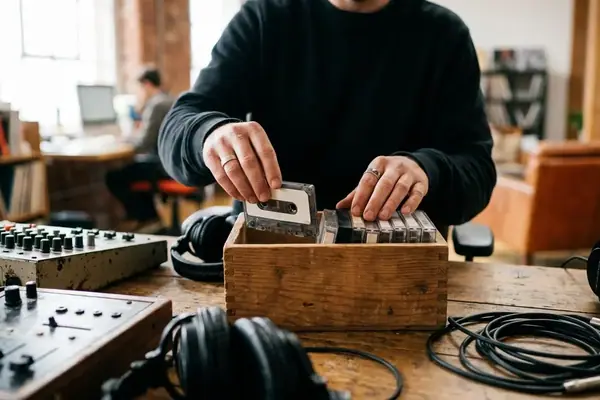
Late-night freeform slots sound different, and their published program descriptions and artist interviews hint at why. While overnight scheduling alone does not guarantee creative freedom, programs explicitly designated as freeform allow volunteer hosts to step outside daytime thematic constraints. In those hours, a selector can let a home-recorded four-track EP breathe, follow a local 7-inch pressing with a twenty-minute drone piece, or play an entire side of a self-released cassette uninterrupted. You hear the tape hiss, the room tone of a makeshift desert studio, and the deliberate pacing of a collector sharing records that have never been ingested into a commercial streaming distributor's catalog.
Mapping Non-Commercial Frequencies and Digital Broadcast Archives
Finding these broadcasts starts at the bottom of the dial. In the United States, the frequency range from 88.1 to 91.9 MHz corresponds to FM channels 201 through 220, the reserved non-commercial educational FM broadcast band outlined in 47 CFR § 73.501. This spectrum is where college broadcasters, listener-supported outlets, and rural desert community stations frequently operate—though community broadcasters also turn up elsewhere on the dial, and archive access always follows each station's own rules.
Once you identify a promising signal or web stream, open the station's weekly program grid. Inspect the individual show descriptions between 11:00 PM and 4:00 AM for explicit mentions of freeform, experimental, eclectic, or genre-crossing selection. Keep an eye out for words like "subterranean" or "overnight" in the show titles. When reading the schedule, check both sides of midnight carefully: a broadcast scheduled for Friday at 1:00 AM sits in the early Friday column on a digital grid, even when a host casually promotes the slot on social media as Thursday night.
Remote listeners tracking Far West Texas or other regional scenes from afar have to account for time zones and date-specific UTC offsets rather than assuming the grid reflects their own wall clock. Most community stations split their digital presence in two: an online playlist database (such as Spinitron) that logs track selections and timestamps, and a separate audio-replay player. A logged playlist entry confirms a record was spun, even when no replayable broadcast audio exists.
Notice the fourteen-day replay boundary: a surviving 2:00 AM playlist entry can document the selection after the station's rolling audio archive has expired, but it cannot replay the transition into the ambient tape loop. Always verify the station's stated retention duration so you can listen back while the MP3 stream is still live.
Tracking Down Unlisted Cuts and White-Label Pressings
Nothing derails an automated audio-recognition app faster than a basement-recorded lo-fi demo or a slightly warped vinyl pressing played over a low-power transmitter. Fingerprint recognition relies on comparing captured audio against a commercial reference catalog. An uncataloged rehearsal tape supplies no matching reference at all, while broadcast static and a turntable pitch slider nudged up by two percent will easily confuse standard matching algorithms.
When a mystery track comes through the speakers, I rely on a strict chronological trail to hunt down the credit:
- Log the dual timestamps and sonic clues: Write down the station call sign, the exact broadcast date, and the station-local time (for example, 2:15 AM). If you are listening via a web archive player, record the file's elapsed position (such as 00:15:00) right alongside the clock time, plus a quick note on the instrumentation or lyric fragments.
- Check the live playlist feed: Refresh the station's online log. Some DJs type their sets in real time, while others backfill the database at the end of the hour.
- Wait for the voice break and legal ID: Keep listening. Under 47 CFR § 73.1201, U.S. broadcast stations must run a legal station identification at the beginning and end of operation and hourly, as close to the hour as feasible at a natural program break. That top-of-the-hour ID only guarantees the call sign and licensed community rather than the music credits, but freeform DJs almost always pair their natural break with a voice back-announcement covering the last fifteen or twenty minutes of music.
- Inspect photographed paper logs: Check the show's archive page or the host's social feed the next day for photos of handwritten studio sheets, which frequently include catalog numbers or small-batch label notes left out of the digital database.
Studio Line Etiquette
When both the digital log and your phonetic notes come up short, reach out through the studio call-in number or text board explicitly published for that program. Send one concise message during a voice break or after the show wraps, including the date, the exact station-local timestamp, and your audible description. Volunteer hosts love talking shop about obscure records, though you may wait a few days for a reply from an overnight selector working a day job.
Turning Ephemeral Broadcasts into Sequenced Personal Playlists
Dumping isolated radio discoveries into a massive digital folder strips away the exact magic that made the songs stand out at 2:00 AM. A great two-hour freeform broadcast has a distinct physical architecture. Before pulling individual tracks for your own curated playlists, map out where the radio set shifts in density, tempo, and mood.
Instead of saving a single orphan track, preserve a three-track reconstruction unit: the preceding cut, your new discovery, and the following track. As you listen to the broadcast replay, jot down the elapsed positions of the transitions alongside the artist and title credits. Pay close attention to the audible bridges the selector builds between disparate genres. A drenched, sustained guitar reverb tail from a garage-psych cut might bleed directly into a humming ambient tape loop, and as that tape loop thins out into high-frequency hiss, it prepares the ear for a sparse acoustic four-track ballad.
When you want to trace the regional roots of these sounds—such as verifying whether a heavy reverb track actually comes from Far West Texas—check the artist biography, the label's roster or releases page, or the liner credits rather than guessing the geography from desert imagery or guitar tone alone. Confirm the exact artist spelling, release title, catalog marking, and track order against the official release page. Buying that cassette or digital EP directly from the artist or small label funds the recording itself, while chipping in during a station's seasonal pledge drive pays for the transmitter power and streaming bandwidth that brought the record to your ears.
From Static to Tracklist: Working Through a 2:00 AM Discovery
Here is a single late-night listening session, from the first guitar chord to a finished sequence.
Step 1: The 2:15 AM Capture. You are streaming a rural desert community station at 2:15 AM station-local time. Out of nowhere, an unannounced, reverb-heavy psychedelic instrumental rolls in. You tap your phone's audio-recognition app, and fingerprint recognition yields nothing. You immediately open a notes file and log the date, 2:15 AM station time, and the sonic cue: slow tremolo guitar over a motorik drum machine, no vocals.
Step 2: The 2:30 AM Voice Break. You stay locked to the stream for fifteen minutes while the instrumental melts into an ambient synth drone. At 2:30 AM, the host fades the music down for a natural program break and back-announces the previous set. Over the air, you catch a phonetic pronunciation of the band name and a mention of a small-run cassette label. You write down your best phonetic spelling right next to your 2:15 AM note.
Step 3: Morning Log Verification and Purchase. The next morning, you pull up the station's online playlist archive and navigate to the 2:00 AM to 3:00 AM block for that broadcast date. Comparing your phonetic notes against the typed DJ log reveals the exact spelling of both the band and the cassette imprint. You search the imprint's digital storefront, match the track title to a self-released four-track EP, verify the release credits, and buy the download along with the last physical tape copy.
Step 4: Anchoring the Sequence. Before closing the station's 2:00 AM playlist log, you grab the credits for the track that played at 2:10 AM and the ambient synth piece that followed at 2:21 AM. You place all three tracks in their exact broadcast order at the very top of a new late-night playlist, using that fifteen-minute pocket of desert radio architecture as the foundation for your own sequence.